|
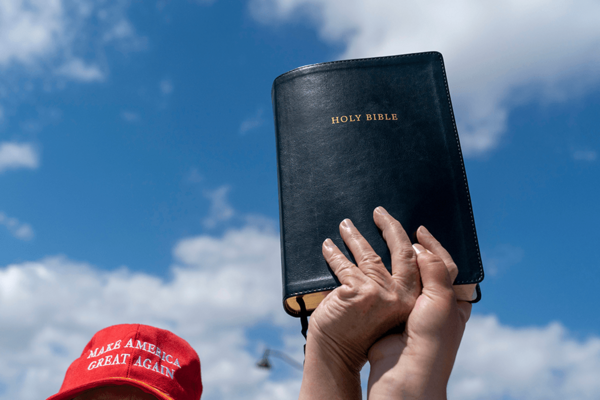
Earlier this week, I was speaking to a group of students at Columbia University about Vice President J.D. Vance’s dust-up with Pope Leo. The thoughtful, curious group asked many great questions, but a few centered around a theme that stuck with me: How does all this end? By “all this,” they were referring not just to the White House’s ridiculous, one-sided spat with the Vatican, but to this whole awful marriage of authoritarian politics and American Christianity. Over the last few decades, we’ve witnessed the slow mutation of the Moral Majority into its current manifestation and its mask-off racism, sexism, and homophobia. It’s been horrifying to watch. The stakes are clear. We can see where this is going. So, how does it end? I did not have a great answer to that question, but combing over some of our articles this week, I can see glimmers of a future beyond the Make America Great Again movement and an idea of how we might get there. I see it in Rubin McClain’s excellent assessment of the Right’s fracture over Zionism, and the opportunity it has created for concerned Christians to take a moral stand on the genocide in Gaza. I see it in this list of Bible verses we wish President Donald Trump would read and actually internalize, and I see it in a world where Christians stop thinking of scripture as magic spells to prove our bonafides, but instead as calls to fix our hearts and change the world. I even see it in Georgia Coley’s review of The Drama, which explores a world where grace is grappled with in all its complexity and power. These are windows into a possible reality or, as 1 Corinthians 13:12 puts it, a way of seeing “through a glass, darkly” what we can accomplish when we view justice in solidarity as the Beloved Community. So, how does all this end? I still don’t have a great answer. Nobody does. But there’s one thing I do know: How it ends is up to us.
|